I’m going a little retro today with a Buzzfeed-style header and some hot takes about elements that don’t belong in a query letter.
Here’s the thing though, if I’m being fully honest: there are no rules. There’s no industry standard when it comes to things that MUST or MUST NOT be in a query letter.
Ask ten agents for a list of what must and must not be in a query letter, and you’ll probably see some of the same elements appearing in both the must and must not lists.
One agent hates themes and thinks you should focus on the plot. Another agent thinks you should lead with the themes and dispense with the plot. (Wonderful agent Betsy Lerner suggested just this in a recent course).
One agent doesn’t care why you wrote the book. Another thinks it’s super important.
The good news is that only my opinions are the correct ones. You’re in luck! Huzzah!
So here we go. After nearly twenty-five years reading and writing query letters, first as a literary agent, then as an author who had to go through the query process, now as a freelance editor helping authors navigate the industry, here’s my take on what doesn’t belong in a query letter.
Self-praise
We live in shameless times, and when it comes to marketing, authors must learn to be their own personal hype beasts.
So when it comes to writing a query letter, some authors will assert their novel is funny, spell-binding, spine-tingling, fast-paced, yada yada yada…
These are wasted words. Agents are never going to believe you.
Read enough slush, and you’ll see a very strong correlation between authors who engage in lavish self-praise and manuscripts that are a steaming mess. Paging Dunning & Kruger…
Instead of needing to tell the agent your book is good–no, really, I pinky swear, promise–demonstrate that you write well by writing a vivid, specific plot description that captures the voice of the underlying material.
Beta reader praise
If you have a killer blurb from a famous author or celebrity, definitely include it in the query letter. Blurbs from famous people can move the needle, which is why you see them on so many book covers.
Otherwise?
No agent will care that your mom, a beta reader, someone you paid to edit your book, or a kid down the block liked your book.
Plot descriptions beginning with rhetorical questions
The word “ensues”
First, pour gasoline on the word “ensues.”
Why you wrote the book
Let me start this section with a caveat.
You are free to tell the agent whatever you want to in the bio section of your query letter. If it’s important to you to tell the agent what led you to write the book, have at it.
The agent is just not likely going to care.
Here’s a pretty decent question to ask when you’re on the fence about what to include in a query letter: Will this information help sell the book?
Think about what you see on jacket copy in bookstores. Do you ever see, “Oh, and this story is personal to the author because it’s loosely based on their great-grandmother?” Unlikely.
The reason you wrote the book is immensely important to you. After all, it’s what led you to spend hundreds of hours huddled over a laptop.
It’s just not likely going to be important to anyone else. Sorry! This is the life we’ve chosen.
The amount of research you put into the book
Let’s go back to the bookstore test. Do you ever see on jacket copy, “The author spent a year researching various wig powders during the American Revolution to lend authenticity to this novel?”
If you’ve written a book that requires research, agents and readers will simply assume you performed all appropriate research in order to create the book. Writers don’t get extra credit for doing what they’re supposed to do.
What ultimately matters is whether the story is compelling. So focus on the plot description.
“A shocking secret that changes everything”
Authors are often terribly worried about preserving spoilers, which leads them to be very vague.
This is an important area where query letters depart from jacket copy. Agents are not normal readers, and they don’t need to be shielded from spoilers like civilian readers. You don’t need to tell the agent how the novel ends, but when it comes to the ins and outs of the story?
Spoil away. Swap out vague phrases like “a shocking secret” and just be specific about what happens.
Themes
Here’s where I depart from Betsy Lerner, who, to be clear, I have an immense amount of respect for. I don’t think themes belong in a query letter. Even if an agent explicitly says they want themes, I still don’t think you should put them in a query letter.
I believe authors should simply focus on making the plot as vivid as possible. Why?
If an agent cares about themes, a good query letter will make the themes apparent even when you don’t spell them out. A cracking plot description with a strong voice will make it extremely clear when there’s, say, revenge, family drama, and a gothic atmosphere.
The reverse is not true. If you only tell the agent you’ve written a novel with revenge, family drama, and a gothic atmosphere, that could literally mean anything and cover all sorts of different stories. An agent who cares about plot isn’t going to be able to discern what makes your story unique.
Ultimately, vividness and specificity carry the day. By definition, themes are vague catch-alls that encompass a multitude of potential stories.
My strong opinion is to steer clear.
Excessive self-deprecation or apologies
You are absolutely not wasting any agent’s time sending them a query letter. So don’t act like you are.
Stand tall behind your story and try to sound like you had fun writing your query, even if you assuredly did not.
Business letter formatting
I learned to type on a typewriter in high school. I learned how to create proper business block formatting with the date and addresses and all the right numbers of spaces.
Those skills are now utterly useless.
You are not writing a business letter when you’re sending a query letter. You’re writing an email.
You’ll instantly date yourself and raise questions about your digital literacy if you use business letter formatting in an email.
See anything I’m missing? Let me know in the comments!
Need help with your book? I’m available for manuscript edits, query critiques, and coaching!
For my best advice, check out my online classes, my guide to writing a novel, and my guide to publishing a book.
And if you like this post: subscribe to my newsletter!
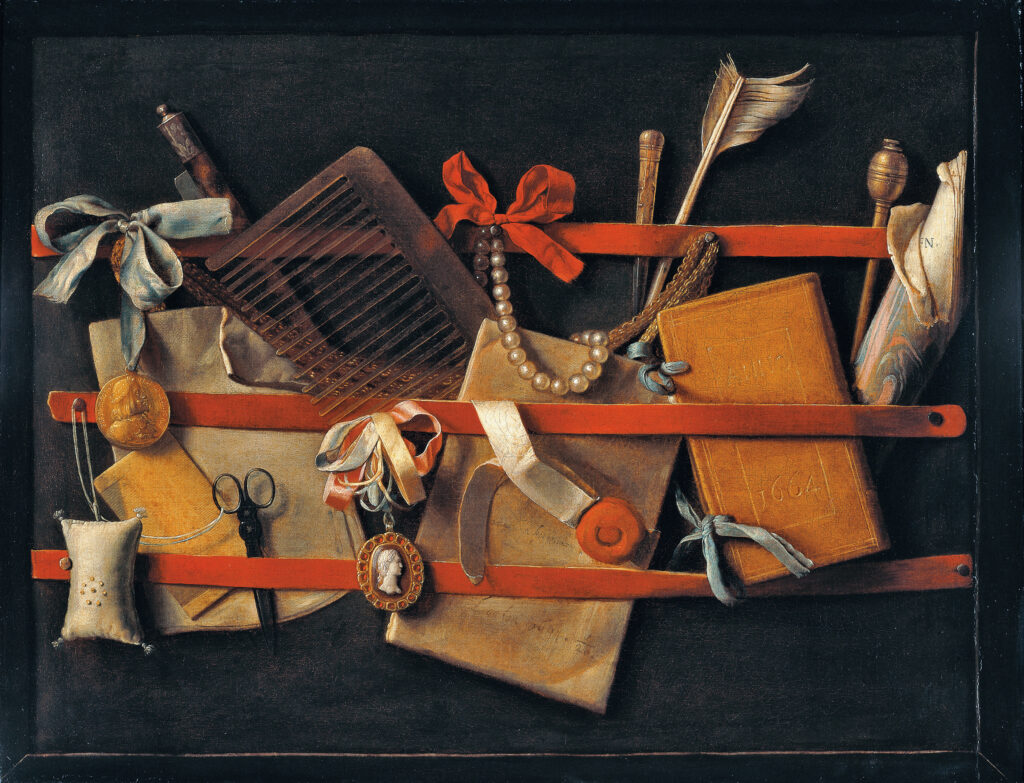
Art: Trompe-l’oeil still-life by Samuel van Hoogstraten


Leave a Reply