Be careful out there.
While the Internet has been an incredible boon to writers, allowing us to find fellow creators and readers, there are also a truly unfathomable number of scammers these days preying on authors’ dreams. There are also well-intentioned publishing professionals out there who don’t realize they’re incompetent and could unknowingly wreak havoc on your career.
Protecting yourself starts with knowing your rights as an author, understanding the business, and learning to recognize common scams.
Here’s what I’ll cover:
- Knowing your rights as an author
- Literary agents (should) only get paid when you get paid
- A good agent should adhere to the AALA’s Canon of Ethics… at minimum
- Know when it’s time to file for copyright
- Publishing gray areas
- Watch out for “Schmagents”
- Not all small presses are created equal
- Middling editing and publishing services with dubious up-charges
- Hybrid publishers vs. vanity presses
- Contests with dubious rights claims
- Common publishing scams
- Impersonation scams
- Be wary of professionals who try to upsell you or reach out to you out of the blue
- Fake book clubs and vanity awards
- “Amazon” services
- How to protect yourself
- Listen to industry watchdogs and experts
- Don’t rush, and exercise common sense
Knowing your rights as an author
Protecting your hard work and intellectual property starts with knowing your rights as an author and recognizing what’s customary within the business.
Educate yourself to protect yourself.
A bad agent is worse than having no agent at all, and there are lots of authors out there who have gotten scammed out of tens of thousands of dollars.
Please, please read this post carefully.
Literary agents (should) only get paid when you get paid
If you’re pursuing traditional publication, here are four important letters: AALA, standing for the American Association of Literary Agents (formerly known as the AAR), an organization that’s sort of a combined guild and watchdog for literary agents. The AALA has criteria for entry and a Canon of Ethics for its member agents.
The predecessor of the AALA was formed in order to spread best practices among agents and stamp out unethical business practices that diminished the profession’s reputation. In part, this helped standardize an agent’s commission at 15% (20% for foreign rights where it’s split with a subagent), and ushered in a prohibition on reading fees, meaning, no agent should charge you to consider your work.
One key baseline that had persisted for years was another ironclad principle: agents only get paid when you get paid. Meaning, historically agents solely earned commission on deals they negotiated on your behalf. Apart from agents recouping reasonable expenses, like photocopies and postage, agents only earned a slice of authors’ advances, royalties, and subrights and were prohibited from charging for other services.
However, the AALA recently loosened the rules around the services agents can offer, and the waters here have become murkier. The overall principle still applies: a reputable agent should still earn the vast majority (if not all) of their income from commissions.
But rather than a blanket rule that agents only get paid when you get paid, authors need to understand that there are new nuances in effect.
A good agent should adhere to the AALA’s Canon of Ethics… at minimum
Not all reputable agents are members of the AALA. There are some good agents out there who have never joined. And AALA of course can’t police every act of bad behavior committed by its members, so it’s not some sort of blanket guarantee.
But if you are approaching a member of the AALA, which you can determine on their database, you should have a reasonably good sense that they are reputable.
AALA members adhere to a Canon of Ethics, which used to be very straightforward. But things have gotten slightly murkier with the loosening of restrictions on agent service offerings and referral fees.
Here’s an abridged version of the AALA’s canon of ethics. First, what’s largely remained the same for quite a while:
- Agents are loyal to their clients’ business, avoid conflicts of interest, and never deceive or defraud their clients, other agents, the general public, or anyone else they do business with.
- Agents must act as fiduciaries and stay secure with their clients’ funds. Agents cannot represent the buyer and seller in a transaction. Agents cannot participate in packaging fees for TV and film adaptations, or accept producer credits (without the clients’ written consent).
- Payments must be made on time (ideally 10 days but at most 21 days without written consent). Books of account must be open.
- Agents may pass along charges, such as photocopies and purchase of books used for sales of other rights.
- Agents must keep their client apprised of matters entrusted to the agent and provide information that the client requests.
- Agents keep their clients’ financial information confidential.
- Agents may not charge clients or potential clients reading fees (except in limited circumstances related to charitable purposes).
All pretty straightforward right? Now let’s get into the murkier stuff amended in 2026:
- Agents may not receive a secret profit, but as of 2026, they can now receive referral fees provided the referral is in the best interest of the client and disclosed to the client at the time of the referral.
- Agents may not charge their clients for editorial services in preparation for submitting work to publishers. However, agents can charge non-clients for editing services. If the agent decides to eventually take on a non-client they charged for editing, the treatment of the fees is subject to “mutual agreement.”
- Agencies can offer clients services such as marketing, promotion, or web design, but representation may not be contingent on signing up for services. Agencies must not respond to non-clients approaching them for representation by directing them to their services.
It should never feel like you are being forced to pay for editing or other services you don’t need in order to have a chance with a literary agent. There are a ton of great editors out there, and I would never recommend hiring an agent for editing primarily because you’re hoping it will lead to representation.
If you choose to engage with an agent who starts offering you services, be very careful, and be prepared to walk away if things start feeling icky.
Know when it’s time to file for copyright
I’m not a publishing attorney, so please don’t construe this section as legal advice. But there’s a common misperception that authors need to file their work with the Library of Congress and/or put a copyright symbol on their manuscript in order to protect it.
Neither is quite true. You own your copyright the second your work is produced. Filing for copyright facilitates pursuing statutory damages for infringement claims, but within the industry it’s customary to register for copyright when the book is published and finalized. (And this must happen within three months, so make sure it gets done).
If you’re ever uncertain on how to proceed here, consult a publishing or intellectual property attorney.
Publishing gray areas
I wish I could tell you that everyone who works in publishing goes to Reputable Publishing Professional Finishing School and gets a badge that proves their bona fides, but that’s just not the case.
For instance, among literary agents, there are some phenomenally talented and experienced professionals who first worked their way up under fabulous mentors, there are some people who woke up one day and just decided to call themselves a literary agent, and there’s everything else in between.
Even if someone you’re considering working with isn’t an outright scammer and has all the best intentions, it’s more important than ever to vet them thoroughly to make sure they actually have the requisite experience and connections to help your career.
Watch out for “schmagents”
The 2010s saw the rise of what people in the industry refer to as “schmagents,” people who simply hung out a shingle online and called themselves an agent.
In order to be a good agent, you need to be familiar with what good publishing contracts look like, have a robust rolodex, and be able to draw upon experienced mentors when things get dicey.
You must view prospective agents with clear eyes. Particularly with the AALA rule changes, there are further incentives for agents to blur the lines between being well-meaning but incompetent and more actively predatory.
I’m here to help. Here’s how to research literary agents and how to know if you have a good one.
Not all small presses are created equal
If you strike out pursuing literary agents, it may be tempting to go to a small press who accepts un-agented submissions. And there truly are some really great small presses out there who do wonders for authors, win awards, and sometimes even serve as a stepping stone to major publisher-level advances.
But be very careful. Small independent presses are rather notorious for a) tying authors to very bad publishing contracts and b) going bankrupt, which can tie up your rights and leave you stuck. Or you might have a weak reversion of rights clause when your book goes out of print and they’re sitting on the rights without actively selling it.
Even if a small publisher has a decent contract and remains solvent, they may not truly be able to offer you much more than you’d be able to do on your own self-publishing.
Vet a small press like your life depends on it. Understand how their distribution works, make absolutely sure you’re signing a good contract, and talk to authors who have worked with them. And if you get a deal from a small press, don’t be afraid to shop that deal around to agents to negotiate the contract on your behalf. It will be worth the 15% commission.
Hybrid publishers vs. vanity presses
Starting in the 2010s, new publishing models came along that combined some of the features of self-publishing and traditional publishing. These are so-called “hybrid” publishers, like Greenleaf, Amplify, and She Writes Press, where authors share in the up-front costs of a book’s production, but typically receive more of a share of the revenue for every copy sold than they would via traditional publishing.
The industry has also been long plagued by scuzzy “vanity presses,” who have historically helped authors self-publish. They may well facilitate an author creating a book, but vanity presses are absolutely notorious for charging way more than they need to and upselling authors on services they don’t need. Maybe not to the point of being an outright scam, but close enough.
Now that hybrid publishing has caught on and achieved a degree of respectability, some vanity presses have caught wind and are now rebranding themselves as hybrid too.
This has created an extremely confusing landscape. Just because someone calls themselves a “hybrid” publisher doesn’t necessarily mean they are a reputable version of one. The Independent Book Publishers Association (IBPA) has a hybrid criteria checklist that will help you evaluate a publisher’s legitimacy.
As with small presses, vet hybrids like your life depends on it and make sure they’re not a vanity press in disguise.
Middling editing and publishing services with dubious up-charges
There are many great freelance professionals out there who can help elevate your craft and make sure you’re really ready to pursue publication. But editors with great experience, particularly ones who have worked at major publishers and agencies, are able to charge top dollar for their services and can be extremely expensive, stretching well into four or five figures.
While the ROI is inherently murky with books and you should never spend money you can’t afford to lose, these high prices for editing are not inherently a scam, but just a matter of supply and demand.
Unfortunately, there are also lots of “editors” out there with limited experience filling in the gaps at lower price points, particularly in places like Fiverr and Reedsy. You have to be careful. These editors may be well-intentioned but give you advice that’s difficult to trust. Or, if they’re not well-intentioned, they may be doing little more than skimming and returning notes, and/or just running your manuscript through ChatGPT.
Be particularly wary of overblown promises from PR and marketing services, who may try and charge you for things that aren’t genuinely going to help sell books. With the rise of BookTok, there are some scammy services that promise you reviews, but are little more than bot farms that don’t yield genuine engagement.
Vet any freelance professional you’re considering working with like your life… you get the drill at this point.
Contests with dubious rights claims
There are definitely some reputable contests out there that can give you a boost, such as the ones hosted by good writers conferences.
But be careful. Delve into the terms and conditions and make sure you aren’t tying up any of your rights by entering the contest. And keep the effect of winning a contest in perspective. As I liked to say when I was a literary agent, my inbox was more competitive based on volume than any competition.
A contest win can be validating, but don’t count on it to propel you to publication on its own. And steer well clear of any contest with shady terms.
Common publishing scams
We’ve covered what reputable agents look like and more nebulous gray areas.
Now let’s talk about the out-and-out scammers. Because there are a ton of them.
Don’t get ripped off! And if you’ve previously self-published or you’re on Facebook, you’re particularly vulnerable to hearing from scammers, so be doubly careful.
Impersonation scams
One of the most common and dangerous scams these days involves A.I.-assisted scammers posing as real life publishing and film professionals, as well as bestselling authors. The scammers use spoofed email addresses or fake social media accounts to reach out to authors out of the blue, gushing very specific A.I.-generated praise about their book, and offering to refer the author to another publishing professional, who is also fake.
For instance, scammers are currently posing as me from a fake email address (nathan.bransforrd@gmail.com, note the extra “r” in “ford”), then referring authors to a fake email address for a real literary agent. From there, authors are invariably told they need editing services or some other bogus charge, which is how the scammers make their money. Or they’ll claim a film or TV adaptation is in the offing, only they need thousands of dollars for a book trailer or screenplay treatment.
Even if you’ve vetted a publishing professional to confirm their credentials, it’s crucial to make sure you’re communicating with the real person. Double-check their email address for typos, watch out for domains that are spelled correctly but don’t match a publisher’s site (e.g. macmillanpublishing.com instead of macmillan.com), be highly suspicious of any “Big Five editor” or “Hollywood producer” who insists on communicating via WhatsApp or Telegram, and when in doubt, reach out directly from their website (such as my contact form) to confirm the legitimacy of the communication.
Be wary of professionals who try to upsell you or reach out to you out of the blue
Now, let me be clear that good and reputable literary agents and editors will absolutely reach out to writers proactively to see whether they have representation or might be interested in writing a book. It does happen.
But if someone approaches you out of the blue with a “book deal” where you have to pay a share of the printing costs or are trying to get you to buy additional services like marketing, it’s probably a scam. As before, make absolutely sure that the person who reaches out to you out of the blue is, in fact, the person they say they are.
And be realistic here. If it feels too good to be true that someone is reaching out to you out of nowhere when you haven’t caught fire with sales or exposure, it is probably too good to be true.
Fake book clubs and vanity awards
A super common scam these days involves representatives of fake book clubs who gush in a long A.I.-generated rave about your book, and they claim they want to feature you. Or you’re a finalist for an “award” that just happens to have an entry fee.
It’s just that they need some money to facilitate that discussion…
At this point I weep for organizers of real book clubs trying to arrange Zooms with the authors they’re reading, because I doubt anyone believes them anymore.
“Amazon” services
Amazon offers one of the biggest paths to self-publishing via its Kindle Direct Publishing.
However, this is only a self-publishing platform. Amazon does not currently offer services that will facilitate an author self-publishing. And self-publishing on Amazon is free.
But there are a lot of scammers out there with “Amazon” in their name to lend authority for scams, charging authors high fees for services they probably don’t need. Even the real Amazon warns about this problem.
How to protect yourself
Publishing scams evolve fast, and as we speak the scammers are evolving and changing tactics.
Luckily there are some great resources out there to help you stay abreast of the latest scams and to make sure you’re staying safe.
Listen to industry watchdogs and experts
Here are some valuable resources to help you spot scammers and stay abreast of the business:
- Writer Beware at SFWA – Victoria Strauss does absolutely indispensable work keeping tabs on publishing scams, disreputable publishers, and all the other actors putting authors at risk. You must subscribe to Writer Beware and familiarize yourself with their resources.
- The Authors Guild – The Authors Guild has a ton of resources for authors, including legal services and contract reviews for members, making them a very strong shield against predatory deals.
- Jane Friedman – Industry expert Jane Friedman and her awesome newsletter The Bottom Line cover the evolving publishing landscape, particularly around hybrids and the marketing tactics that work and don’t work.
- Publishers Marketplace – A very helpful resource for vetting publishing professionals (its deal database is indispensable), and keeping abreast of industry news.
- Absolute Write and Reddit – These are helpful places to check for writers’ previous experience with publishers and industry professionals. Take the opinions with grains of salt and vet the vetters, but if there’s a consensus to run away from a publisher, for instance, I’d probably listen.
- Reach out to me – If you’re ever uncertain about whether you’re being scammed or feel uncertain how to move forward, I’ll do my best to help you.
Don’t rush, and exercise common sense
At the end of the day, there’s only so much that industry knowledge and lists of scammers can do to protect you.
The reason there are so many publishing scammers is because of authors’ collective emotional vulnerability. We badly want validation, we crave the big break, we want to be able to tell our friends we have an agent and a book deal.
Your best and most important insulation comes from two crucial mindsets:
- Don’t rush. There are no emergencies in book publishing. Yes, you want to be published yesterday. Don’t lose your head. Vet everyone you are considering working with like the potential business partner they really are. The road to publication is almost always a long one. Settle in for the ride.
- Exercise common sense. The old adage is ever true in publishing: If something seems too good to be true, it probably is. Take a deep breath and start verifying.
I truly wish that I never had to write this post and that it didn’t have to be so long. I hate that we live in such a scam-prone society.
But you and your book are precious. Be careful out there, and make sure you stay in safe hands.
Need help with your book? I’m available for manuscript edits, query critiques, and coaching!
For my best advice, check out my online classes, my guide to writing a novel, and my guide to publishing a book.
And if you like this post: subscribe to my newsletter!
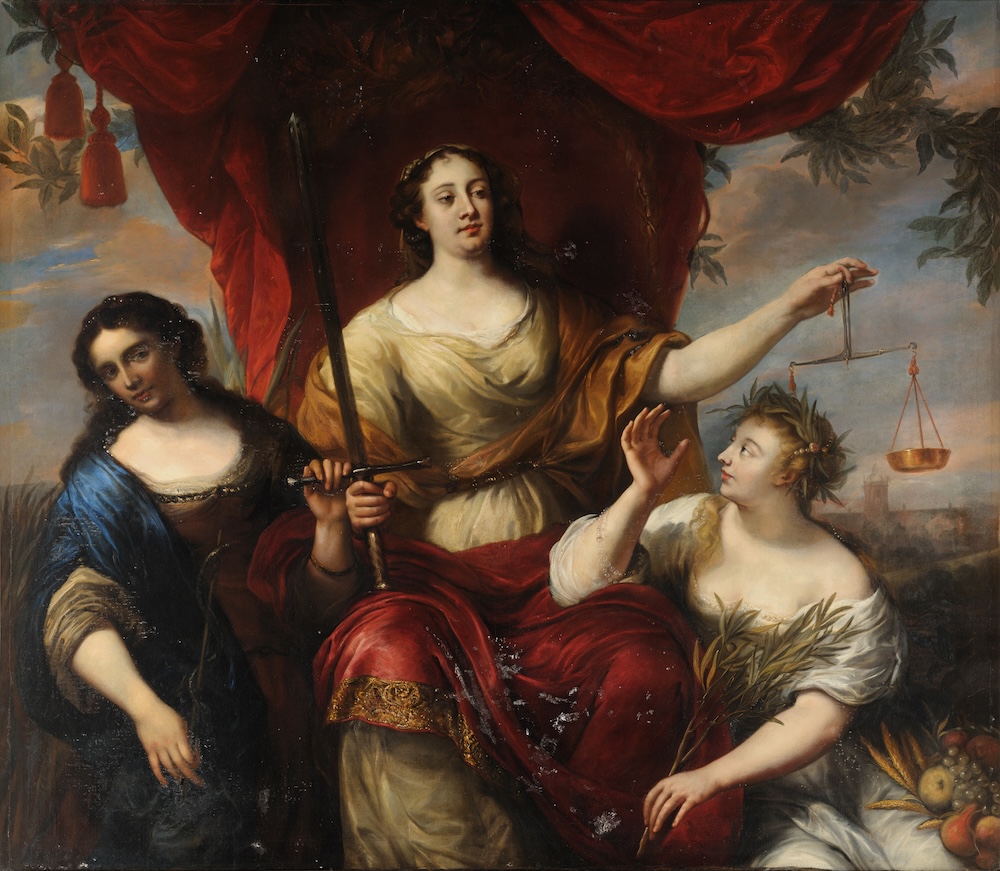
Art: Prudence, Justice, and Peace by Jürgen Ovens


Many thanks, Nathan for a succinct primer on author’s rights! And for the links. I particularly value Writer Beware, which is continually updated, important since good companies and people sometimes go bad. And I like the painting. Prudence, Justice, and Peace to all!