The last time I updated this guide to social media for authors, it was 2018 and we were in the midst of peak “all authors need to be on social media full stop” conventional wisdom.
That’s no longer the case. Publishers have long accepted that even a massive social media following may not sell books on its own. It’s harder than ever to gain social media traction without the time dedication of a full-time influencer (though it’s still possible!), and a lukewarm social media presence isn’t really going to move the needle.
No author must be on social media. If you hate social media, it’s going to show and you’re better off redirecting your marketing efforts to other activities. The only must-have for authors is a website.
Still, if you’re game, social media can be a way to find your people, build anticipation for a book, and find your voice.
And it’s never too late to get started. Here’s how to do it and what we’ll cover:
- Listen and learn
- Pick your platform
- The text-oriented platforms
- X/Twitter
- Threads
- Bluesky
- The video platforms
- TikTok
- Snapchat
- The text-oriented platforms
- Find your niche and provide value
- Identify your pillars
- Be genuine and have fun
1) Listen and learn
Gone are the days where big time literary agents were posting helpful advice and manuscript wishlists on Twitter. Unfortunately, social media these days is now awash with hyperbolic hot takes and breathlessly terrible advice, particularly on Threads. Social media is no longer a good tool for gaining helpful wisdom about the publishing industry.
As you’re dipping your toe in the waters, tune out the hot takes. But if you’re hoping to build an audience, it’s still important to first get a sense of what’s working on social media, who is getting traction, and what they’re doing to find their people.
Test out different platforms. Find and follow your favorite authors who are active on social media. Follow the remaining publishing experts. Follow influencers in other fields for ideas as well. Participate in discussions and get in tune with the zeitgeist.
You’ll be surprised how quickly you’ll learn through osmosis, just by paying attention to what works.
Don’t necessarily imitate, it’s ultimately crucial to be yourself, but think about what the popular accounts are doing that contribute to their success.
2) Pick your platform(s)
In the early days of social media, this wasn’t even a step. It was just Facebook and Twitter. Now, however, social media has fragmented significantly, and you’ll likely want to choose a social platform or two to focus on.
These days, while there’s some overlap, the platforms are largely divided by text-oriented platforms (X aka the ghost of Twitter, Threads, Bluesky) and video-oriented platforms (Instagram, TikTok, Snapchat). The husk of Facebook lives somewhere in the middle, but I’m putting it in the text bucket.
Also, for the purposes of this post, I’m focusing on the core social media platforms, while leaving out other sites like YouTube, Substack, and Reddit, which have some features of social media but are more akin to web infrastructure than true social networks.
I’ll get into the specifics of the sites in a sec, but I’d argue your choice of platform should boil down to two key questions:
- Which platform(s) do you enjoy? If you don’t enjoy it, you’re not going to be good at it. Focus on the platforms that give you the most delight.
- Where is your audience? Where are your potential readers spending their time? As much as you might like Facebook, if you’re hoping to reach a younger crowd, you’re not likely to find them there.
Now, here’s some site specific advice and follow recommendations.
The text-oriented platforms
X/Twitter
What it is: 280 character limited posts
The vibe: Chaotic, anarchic, MAGA-leaning, slop heavy, funny
Who’s there: This is fine die-hards, journalists, politicians, Elon Musk fans. Most publishing industry people departed en masse save for a few.
Tips
- Just post through it if you’re still there.
Publishing types to follow:
- Joyce Carol Oates – The grande doyenne of Twitter.
- Lincoln Michel – Astute writing advice and cultural commentary.
- Camryn Garrett – So good at Twitter she had a large following well before her first book deal.
Non-publishing types to follow:
- Brandy Jensen – Funny as hell.
- Seinfeld Current Day – Jery get iPad.
- Aaron West – Hilarious soccer commentary and more.
What it is: The o.g. social network.
The vibe: A heady mixture of heartfelt updates from your social circle combined with slop to the moon.
Who’s there: A crowd that increasingly skews older, heartland vibes.
Tips
- As Instagram shifts to video, Facebook is one of the last places where photos still perform reasonably well.
- As your presence grows, you can consider forming a group to facilitate discussions and connection among your fans.
Publishing types to follow:
- Christina Lauren – One of the top contemporary romance duos has a strong page for their fans.
- Silent Book Club – SBC has leveraged the Group platform to strong effect and created a lively community.
- We Need Diverse Books – A wonderful organization, and very effective at sharing social media-friendly photos and graphics.
Non-publishing types to follow:
- The Huntington – You’re likely familiar by now with The Huntington because of my Friday photos, but they also have a lively Facebook page.
- J. Kenji López-Alt – The chef and cookbook author has a fun mix of personal and useful content, which authors could emulate.
- Men in Blazers – If you follow soccer you probably already know about Roger Bennett and Men in Blazers, but a great model for building a personal connection with your followers with constant sharing.
Threads
What it is: 500 character limited posts. Facebook’s attempt to clone Twitter.
The vibe: Algorithm heavy, rage-bait to goose engagement, the most unhinged takes imaginable.
Who’s there: Twitter refugees, brands, aspiring authors.
Tips
- Threads favors engagement, so hot takes, questions, and conversation sparkers tends to work well.
- Don’t be afraid to go niche with your posts. The algorithm will connect you to people interested in whatever you talk about.
Publishing types to follow:
- Kathleen Schmidt – A books PR specialist who posts helpful information about that side of the business.
- Moniza Hossain – A children’s book author who posts engagingly about all facets of the writing and publishing process.
- Kate McKean – One of the small handful of literary agents still posting helpful advice on social media.
Non-publishing types to follow:
- Derek Guy (the “menswear guy”) – Enjoyable niche commentary mixed with incisive wit.
- Padma Lakshmi – A mix of visual threads, behind-the-scenes, and political commentary.
- Kara Swisher – Love her or not, her takes are never dull.
Bluesky
What it is: 300 character limited posts. Another Twitter clone.
The vibe: Earnest, and a deserved reputation for being a bit humorless.
Who’s there: Liberal-leaning Twitter refugees, #TheResistance, publishing industry types
Tips:
- Bluesky’s post recommendation algorithm is very bad as of this writing, and most people focus on posts from the people they actually follow.
- Bluesky is the last social network that doesn’t down-rank links off the site, meaning you can share articles and posts without them getting buried by the algorithm.
Publishing types to follow:
- Victoria Strauss – Leader of the indispensable scam watchdog site Writer Beware.
- John Scalzi – Writer with a very lively following.
- Ron Charles – Former Washington Post book reviewer who posts his indispensable weekly newsletter.
Non-publishing types to follow:
- Darth – Hilarious photoshopped images and commentary.
- Jamelle Bouie – Astute and pithy political commentary.
- The Onion – The legendary satirical news site, still going strong.
The video-oriented platforms
TikTok
What it is: Short form vertical video
The vibe: Algorithm-driven, fad and meme heavy, intense theater kid energy
Who’s there: Short film masters, niche performers, hot takers
Tips:
- TikTok is not just about the videos, TikToks with strong engagement often have a lively comments section
- Authenticity is huge. It’s not really a place for inorganic self-promotion.
- You’ve probably heard about BookTok, but that large niche on TikTok tends to be more about bottom-up fan-driven enthusiasm than authors gaming the algorithm.
Publishing types to follow:
- Alex Aster – A famous case where an author pitched an idea directly to her followers, it went viral, and she landed a book deal, generating demand before the book even landed on shelves.
- Rebecca Yarros – The author of Fourth Wing has ridden the popularity of her books among TikTokers and built an engaging author feed that shares behind-the-scenes updates.
- Chloe Gong – Not only a very popular fantasy author, but a true TikTok natural.
Non-publishing types to follow:
- Taylor Lorenz – The indispensable tech journalist also has a popular TikTok feed.
- Cabagges – A stylish couple sharing recipes and travel.
- Francis Bourgeois – Kind of the epitome of TikTok, in my opinion. Built a huge following based on his unabashed, contagious love of trains.
What it is: No longer about filter-heavy photos. Instagram in recent years has leaned extremely heavily into videos, divided between Stories (vertical videos that disappear after a day) and Reels (vertical videos that don’t disappear).
The vibe: It’s all about the #Influencers
Who’s there: #Influencers and micro-#Influencers. You’re increasingly unlikely to see posts from people you know.
Tips:
- The algorithm now heavily favors video, so think about fun, engaging videos and stories over photography.
- It’s very difficult (but not impossible) to send people to blog posts or articles. Instagram favors in-app engagement over driving traffic elsewhere.
Publishing types to follow:
- Tahereh Mafi – The wildly stylish bestselling author Tahereh Mafi has an Instagram page to match.
- Alexandra Bracken – A lively mix of behind the scenes and book promos.
- Ransom Riggs – Ransom combines his impeccable taste with his love of photography in a very cool mix.
Non-publishing types to follow:
- alextravel.s – After running a popular subreddit for many years, luxury travel adviser Alex of Alex Travels has dominated Instagram in just a few months with super engaging videos.
- Alana Lintao – An extremely funny and earnest young model who, to me, epitomizes Gen Z’s digital fluency.
- Johnny Hilbrant Partridge – Recently profiled in the New York Times, he built a wildly popular account satirizing the finance industry.
Snapchat
What it is: Ephemeral photo and video messaging combined with “Spotlight” (short-form public video scrolling) and “Stories” (ephemeral posts).
The vibe: Intimate, casual, conversational
Who’s there: Gen Z, younger millennials, close-knit friend groups, and Snap influencers.
Tips:
- Because snaps and stories disappear, there’s little pressure for perfection. Audiences expect authenticity (even more so than the other platforms), not a polished aesthetic.
- Much like TikTok, “Spotlight” posts can go viral and quickly build a following.
Who to follow:
- Candidly, I’m not really on Snapchat. If you are, let me know your favorite accounts in the comments section!
3) Find your niche and provide value
You don’t have to join and be active on every single one of these social media platforms, and in fact, you’ll likely go crazy if you try to do that.
Instead, focus on the social media platforms you actually enjoy. Better yet, if it’s important to you to build a following, think about the reason someone should follow you.
Most importantly: How are you providing value to your followers?
For instance, my following on social media has never really been about how witty or clever I am on social media. Instead, I’d wager most people follow me as a way of keeping up with my blog, which is my true social media “base.” That’s the real value I provide people.
Other people on social media are super witty and clever, some are master curators and share all the best articles, some people are very engaging and spark interesting conversations, some people are wildly stylish, some people have the best takes on popular reality shows.
At first: Experiment wildly. Try lots of different things. See what resonates.
Through time, you’ll find your niche. If you stick with it consistently for a while, converse with other people in your area, and you’ll soon find your audience.
4) Identify your pillars
Once you begin to find what works, there are two things that are helpful to consider:
- What are your content pillars? In order to help narrow down what you can post out of the world of infinite possibilities, it can be helpful to think of your content in terms of pillars. For instance, mine boil down to writing advice, publishing news, and marketing. As you brainstorm a content calendar, you can also think about how to repurpose content to play to the strengths of the various platforms.
- Where is your home base? I’ve always been reluctant to lean too heavily into social media because it means I’m dependent upon someone else’s platform, which can change character at any time (e.g. Elon Musk’s Twitter). I’ve found it valuable to have a blog and newsletter that are wholly my own, which is why this is mainly my focus.
I would strongly advise thinking about how you can build a direct relationship with your followers as much possible, in order to insulate yourself from the whims of billionaire megalomaniacs and the social media platforms they own.
Supplement any social media strategy with a newsletter, even a rudimentary one, so you can take your followers with you if your platform of choice changes.
5) Be genuine and have fun
If there’s anything I can leave you with it’s this: social media is social.
Seems simple, and… it really is. Social media is all about what you make of it. If you’re having fun, chances are your followers will have fun. If you’re not having fun, take a break! It’s okay! You don’t have to be there!
It’s easy to get sucked into metrics and your number of likes, but what ultimately matters is engagement. Are people talking back to you? And are you enjoying the experience?
I’ve met some of my best real life friends through social media, it’s become a guiding light at various parts of my career, and I’ve had a ton of fun.
I’ve long been a reluctant social media user, but I wouldn’t be here writing this post without it.
ORIGINALLY PUBLISHED: April 2, 2018
Need help with your book? I’m available for manuscript edits, query critiques, and coaching!
For my best advice, check out my online classes, my guide to writing a novel, and my guide to publishing a book.
And if you like this post: subscribe to my newsletter!
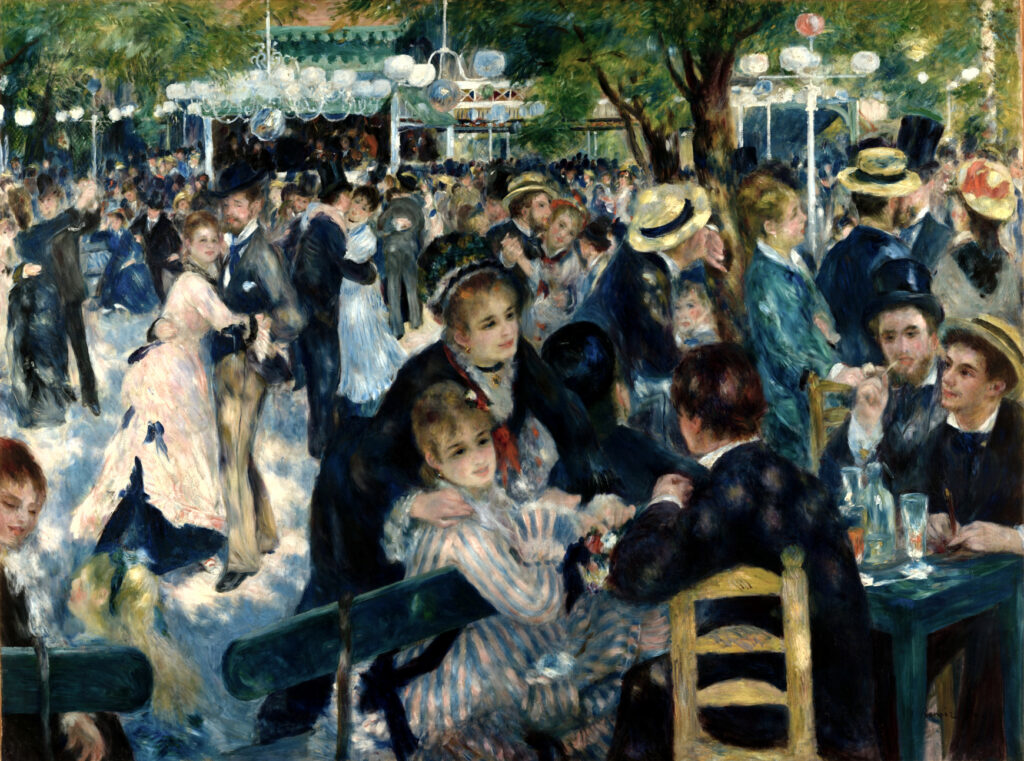
Art: Bal du moulin de la Galette by Auguste Renoir


Really useful information, thanks for blogging about this!
“Follow the agents who represent your favorite books…” More info about how to do that, please: how do I find Annie Proulx’s or Alice Munro’s agent?
As a general rule, if Googling fails, check the acknowledgements sections of books – authors often thank their agents there. Otherwise, if you’re a member of Publishers Marketplace you can search deal announcements and you might be able to find the information there.
I’m just starting to follow authors on Instagram (Daniel Kraus and David Arnold) and am enjoying it.
Thanks Nathan. This is really useful information. Unfortunately, my Twitter presence has de-evolved into posting criticism of President Trump. Must stop creating potential powerful enemies..
Great info, thanks!
I finally took to twitter in January. I am surprised how much fun it is. It is my style of communication. I was called a rock star by another writer. My ego was sky high. Still is. 🙂
Social media is huge. We need to accept it and embrace it. You are so right when saying follow your niche. That right there is the bottom line.
Thanks, Nathan! This is great information and really helpful. I took the plunge into Twitter last summer and to my surprise, have found it an enjoyable experience. It takes time, but it has a great author community and lots of supportive people.
Thanks for the info. I don’t think I’ve ever read such info all in one place and concisely arranged. Wonderful. But I had to laugh. You said social media doesn’t have to be your whole life. And then you went on to say exactly how life arresting (well, it seemed like it) all the steps are and how many things you need to pay attention to. I have friends who love to write, and they are quite good at it, but hate thinking about all the other nonsense that comes with selling books nowadays. Because they are old, tired, or have many pressing “business of life” duties. It’s not at all like the old days when you merely had to be an awesome writer, get an agent, said agent makes sale, and the publisher did all the promotion where author shows up for arranged book talks and signings. Now the author has to wear all those hats and make all arrangements, with the addition of social media, even when a publisher picks you up. James Michener wrote a novel entitled, The Novel, in which he lays out the 4 steps of becoming a noteworthy author. None of which, of course, included the merits of social media, because it was published decades ago. I fully realize that social media is necessary today, but I’m thinking holy cow! And wondering how many wonderful authors would have ever achieved national and international acclaim if they were also responsible for their own social media promotion. Ernest Hemingway? On Twitter? He might have done himself in even earlier. Not a complaint, really. Just an interesting comparison. And yes, I really do have friends who aren’t able to, for whatever reason, grapple with social media in order to promote their books. I hear about it all the time. You can’t just be a terrific writer anymore; you have to be everyone and everything.
Hemingway was an incredibly canny self-promoter. He would absolutely be on Twitter if he were alive today.
Great helpful article BUT you don’t mention one of the BEST (IMO) social media sites for writers: Substack!
Yes I did mention Substack? I explained why I’m not including it for the purposes of this post. “Also, for the purposes of this post, I’m focusing on the core social media platforms, while leaving out other sites like YouTube, Substack, and Reddit, which have some features of social media but are more akin to web infrastructure than true social networks.”
Ah, you’re right I missed that part! My bad! But I respectfully disagree in your decision to leave out Substack in this post. I so much enjoy Substack as my main social media site, and I use Notes much like I used to use Twitter. I’ve made lots of writerly friends and connections on Substack– much more than I ever have on any other platform. You don’t have to have a newsletter to use the social network aspects of Substack. Anyway, I think it’s a shame to leave it out because there are lots of writers connecting with each other over there. (BTW, long time reader of your blog!)