I’ve worked with many older writers over the years, and one of the things I appreciate most about writing is that it’s never too late to write well. With the recent success of Theo of Golden by Allen Levi, a runaway success by a 70-year-old debut author, it occurred to me that I’ve never written a post oriented toward my elders.
Here’s my advice for older writers.
Don’t sweat age discrimination
First and most importantly, like nearly every other industry, publishing absolutely suffers from “hot young thing” syndrome when it comes to young and attractive debut authors, but there’s actually quite a lot less age discrimination than it may seem from the outside.
After Theo of Golden started catching on after its self-publication, agents and publishers didn’t hesitate to try to snap him up. Frank McCourt published Angela’s Ashes in his late 60s, and Harriet Doerr published Stones for Ibarra in her 70s. Legendary children’s book author Jane Yolen was publishing books well into her 80s.
At the end of the day, particularly for fiction, agents care about the book. If you write a great one, they aren’t going to sweat your age. And you don’t need to mention your age in your query.
You must stay abreast of technology
It’s never been enough to “just be an author,” and publishers will expect you to conduct yourself professionally and do everything you can to promote your book. You don’t need to be wildly tech savvy, but you must understand some crucial basic computer skills.
You need a website, you need an email address you don’t share with your spouse, you need to be conversant in using Microsoft Word, and you need to know how to have meetings over Zoom and Google Meet.
Better yet, you should understand email thread etiquette. If your career hasn’t given you these skills, you may need to do some brushing up. Don’t stick your head in the sand on this stuff.
Writing and being edited can be a humbling experience
Every author is different, and I’ve worked with some older authors who were wonderfully receptive to feedback, but one dynamic I’ve noticed is that when writers have experienced quite a lot of success in their work life, they are sometimes not used to receiving direct constructive feedback.
It’s crucial to park your ego if you’re going to share your work.
There are few experiences more humbling than writing and pursuing publication, no matter how successful you’ve been in other walks of life, and digging deep from the start can help you prepare.
Consider self-publishing if you don’t feel patience for the long game
Publishing moves at a positively glacial pace, and these days it’s taking longer than ever. It could easily take six months or more to find an agent, six months or more to receive an offer from publishers, and it will likely be a year and a half to two years after you sign the contract before the book comes out.
The absolute best case scenario for a novel to go from query to publication is around two years. That’s as fast as it gets.
If you don’t feel like you have that kind of time, I’d strongly consider self-publishing. Once you have your book edited and have all the necessary files, publishing is instantaneous.
For many older authors I’ve worked with, life is too short to wait around.
It’s never too late
Writing is one of the absolute best pursuits life has to offer, and one of the best things about it is that it’s never too late.
Your writing matters. It may be intimidating to get started later in life, but you really can do it.
Any other advice you’d share? Let me know in the comments!
Need help with your book? I’m available for manuscript edits, query critiques, and coaching!
For my best advice, check out my online classes, my guide to writing a novel, and my guide to publishing a book.
And if you like this post: subscribe to my newsletter!
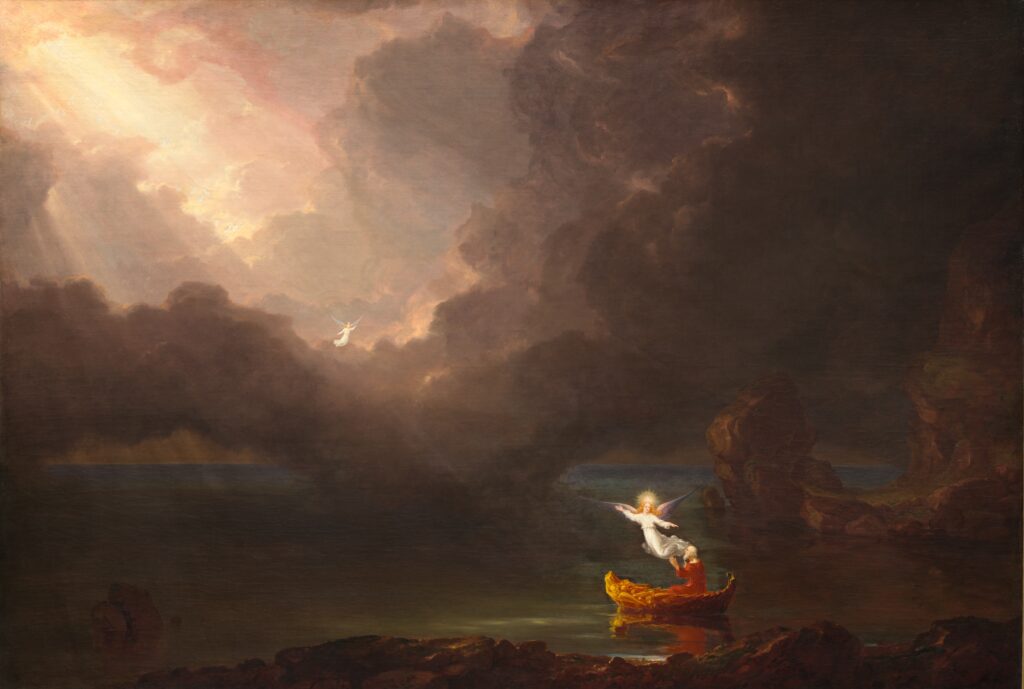
Art: The Voyage of Life: Old Age by Thomas Cole


Thanks for talking about this. It’s a much appreciated and inspiring post. And I really needed this kick in the pants.
I published my first book at the age of 75, the sixth one this spring! Theo of Golden is just amazing. I just reread it.
Are there any website builders that you know of that are NOT for already published authors? I have searched, tried a few and failed. I am pretty tech savvy, but this has stumped me. I am in the process of looking for an agent on one project and re-working another project. Thank you for all the advice you give. You are a gem!
Straightforward advice. Thanks Nathan.
Eva
I was 53 when I got an agent and my first book deal. Now at age 73 my latest novel is published by a small press. This is all good advice but most all of it can also be applied to people of all ages. For example, there are a lot of younger writers who think that a website is not necessary, but it’s best to have one.
Thank you, Nathan. We rarely hear this vital message, and you said it so well.
Thank you for this helpful topic aimed at us late bloomers. I’ve been researching the capabilities of Mailerlite, which has landing pages that can double as a basic website. My question is do you think that is sufficient or should I have a fully dedicated website? And do blogs double as newsletter material? In other words, do new blogs automatically roll out to subscribers as a newsletter? I noticed you provide the links to your website in the newsletter. Is that easier? I love your newsletter, by the way—very meaty.
I think you should have a fully dedicated website that lives on a domain you control. You can set up blogs to send automatically to newsletter subscribers, but I’d recommend sending them separately if you can.
Thank you for the quick response. I suspected it was like the vacuum cleaners that do everything but nothing well. Yes I own a vacuum just for the stairs. And I had forgot about the ownership factor. I remember scrambling to copy over postings on topics I wanted to develop further back when yahoo groups folded. I certainly wouldn’t want to do that with a whole website.